Twin Falls IDOG session leads to reforms

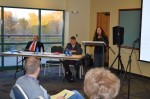
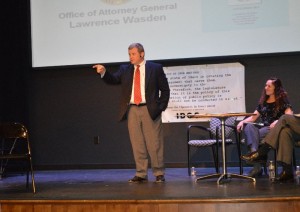
TwinFalls13_IDOG_04TWIN FALLS, Idaho – Close to 100 people filled the Twin Falls Center for the Arts Auditorium for an IDOG seminar on Idaho’s open meetings and public records laws on Tuesday, Oct. 15, 2013, led by Idaho Attorney General Lawrence Wasden.

Those in attendance ranged from state senators and representatives to employees and officials of cities, counties, school districts, fire districts, police departments, highway districts and housing authorities, to news media including print and broadcast journalists, to lots of interested citizens.

In dramatic fashion, the Twin Falls session brought out problems in open meeting law compliance by the city of Twin Falls, when a city council member expressed concerns during the break about practices her city was following involving closed subcommittee meetings. That led eventually to numerous news reports, a formal complaint filed by IDOG with the county prosecutor, and the city reforming its practices to make all its meetings and processes much more open and transparent.

Even that night, it was clear that the session, sponsored by IDOG and the Twin Falls Times-News, was having an impact.

“Everybody should go through this!” one elected official wrote in her evaluation of the session.

A state senator wrote that his takeaway lesson was: “When in doubt – be more open.”

The audience participated in interactive skits to demonstrate what to do – and what not to do – to comply with the state’s two key open government laws. There were also presentations, stories, and an informative slide show about the requirements of the law and what they mean, featuring Attorney General Wasden, Chief Deputy Attorney General Brian Kane, and IDOG President Betsy Russell, a newspaper reporter.

A planning and zoning commissioner who attended called the session “a great practical lesson in public access to government records.”

Wrote a library board member, “OK, we’re doing a few things that we need to fix – and can!”

A citizen and former school board member wrote that he “learned the ins and outs – what can and can’t be done to abide by the law.” He’ll put that to use, he wrote, “Educating board members on executive session – correcting noticing.”

A county commissioner wrote that he learned, “Commissioners may be seen together, but cannot conduct business,” outside of a noticed, open public meeting.

A public employee wrote that the session “clarified posting of notice request, in detail.”

And a citizen wrote that the session was an eye-opening education about open meeting laws. In the future, he said, he’ll “understand news articles better.”

Strong turnout at Hailey open government workshop

Idaho Attorney General Lawrence Wasden discusses the Idaho Public Records Law with a super-engaged crowd in Hailey on Monday evening.

Idaho Attorney General Lawrence Wasden discusses the Idaho Public Records Law with a super-engaged crowd in Hailey on Monday evening.

HAILEY, Idaho – A super-engaged crowd of 45 gathered in the Old Courthouse in Hailey on Monday evening, Oct. 14, 2013, to learn about Idaho’s open meetings and public records law, and those attending – government officials and staffers, reporters from the news media, and interested citizens – had plenty of questions.

By the time they left, the crowd gave the session top reviews, saying they’d learned plenty. Plus, each attendee left with numerous handouts, including the Idaho Attorney General’s handy Open Meeting Law Manual and Idaho Public Records Law Manual.

The Hailey session, co-sponsored by IDOG and the Idaho Mountain Express, featured a hearty buffet provided by the Mountain Express to help everyone through the evening.

It was the first of four open government seminars planned this week in southern and eastern Idaho, featuring Idaho Attorney General Lawrence Wasden, Chief Deputy Attorney General Brian Kane, and IDOG President Betsy Russell. Tuesday night, the sessions come to Twin Falls; Wednesday, Fort Hall; and Thursday, Rexburg.

In reviews of the session, the Hailey crowd was highly impressed – and not just with the food (but that, too).

“I refined what I already know,” wrote a local prosecuting attorney.

“I learned that the public is owed openness and information,” wrote an elected school board trustee.

A reporter wrote that a top lesson was “Ask for what you need,” and as for something she’ll put to use right away at work: “Narrow requests.”

A county employee said after attending the seminar, his task is clear: “Trying to put more public record information online to provide easy access to the public.”

A citizen who attended came away with this lesson: “Your public work is PUBLIC. All of it.”

Judge rules against media groups in hospital case

From the Associated Press/Idaho Statesman

BOISE, Idaho (AP) — A federal judge presiding over an antitrust lawsuit between two major Idaho health care providers has declared that trial testimony and documents can remain hidden from public view, providing attorneys make a compelling case for secrecy.

U.S. District Judge B. Lynn Winmill ruled Tuesday after a coalition of Idaho news organizations challenged a broad protective order approved by the judge for documents and testimony leading up to the trial.

The lawsuit, now in its third week, focuses on allegations brought by the Idaho Attorney General, the Federal Trade Commission and Saint Alphonsus Health System against St. Luke’s Health System. The case emerged in the wake of St. Luke’s bid to buy Nampa-based Saltzer Medical Group.

The week before the trial began, Winmill gave attorneys in the case latitude to designate documents and witness statements for “attorneys’ eyes only,” in effect sealing them off to the public and media covering the case. Winmill acknowledged the public’s right to know in an open trial, but balanced that with giving the hospitals the ability to protect trade secrets. As a result, more than half of the first two weeks of the trial took place behind closed doors.

The news organizations disagreed and filed a motion to intervene, arguing everything presented in the trial should be accessible to the public. The coalition includes The Idaho Statesman, The Associated Press, Times-News, Lewiston Tribune, Moscow-Pullman Daily News, Idaho Press-Tribune and the Idaho Press Club.

Winmill didn’t entirely agree with arguments offered Tuesday by media attorney Charles Brown of Lewiston.

“This is a (trial) of great interest to the public,” Winmill said. “The problem in this case is also very unique.

“We can’t, I think, (protect trade secrets) with a broad axe. We can’t do it with a scalpel.”

However, Winmill ordered lawyers for the hospitals, FTC and attorney general to file affidavits over the next week explaining why each sealed document and witness statement merits being sealed.

Winmill also said he will review the documents and testimony to make sure businesses are not misusing their “trade secret” status.

He also offered Brown the ability to review the documents as long as he does not disclose their contents to the news organizations. But Brown said the judge has the responsibility to be the “gatekeeper” of the public’s right to know.

St. Luke’s is accused by two competitors — Saint Alphonsus Health System and Treasure Valley Hospital — the state and federal government of breaking antitrust laws in its buyout of the Saltzer group. The trial is expected to end in mid-October, with a ruling sometime after Nov. 7.

From the Associated Press/Idaho Statesman

Four open records, open meeting law seminars set this month

The public is invited to attend any of four upcoming free seminars on Idaho’s key open government laws – the Idaho Open Meeting Law and the Idaho Public Records Law – Oct. 14-17 in the Wood River Valley, the Magic Valley and eastern Idaho, led by Idaho Attorney General Lawrence Wasden.

It’s a chance to learn what is covered – and what is not – by these important laws, in a fun and accessible format. Presenters in addition to Wasden will include Deputy Attorney General Brian Kane and IDOG President Betsy Russell. Government agency employees, reporters from all media, and interested citizens all are invited.

The seminars all will start at 6 p.m. These sessions are recommended by the Office of the Attorney General, the Association of Idaho Cities, the Idaho Association of Counties and the Idaho Press Club. The sessions are free and include refreshments; because space is limited, attendees are asked to RSVP.

Here are the four specific locations and RSVP information:

MON. Oct. 14, HAILEY – Co-sponsored by the Idaho Mountain Express
Old County Courthouse, 201 2nd Ave S., Hailey ~ 6 pm
RSVP to Allison Kindred, akindred@mtexpress.com or (208) 726-8060, ext. 117

TUES. Oct. 15 – TWIN FALLS – Co-sponsored by the Times-News
Twin Falls Center for the Arts Auditorium, 195 River Vista Place ~ 6 pm
RSVP to Autumn Agar, aagar@magicvalley.com or (208) 735-3255

WED. Oct. 16 – FORT HALL – Co-sponsored by the Blackfoot Morning News, the Idaho State Journal, and the Post Register
Sho-Ban Hotel & Event Center, I-15 Exit 80, Fort Hall ~ 6 pm
RSVP to Leonard Martin, (208) 785-1100 or publisher@cableone.net

THURS. Oct. 17 – REXBURG – Co-sponsored by Standard Journal & Post Register
Conference room at the Development Center, 343 East 4th North, 2nd floor ~ 6 pm
RSVP to Matt Eichner, editor@uvsj.com, or (208) 356-5441

IDOG and Attorney General Wasden have been holding these sessions around the state since 2004; most recently, seminars were held last winter in Boise, Payette and Nampa. The Hailey seminar will be the 27th since they began; they are funded in part by a grant from the John S. and James L. Knight Foundation through the National Freedom of Information Coalition.

IDOG is a non-profit coalition for open government whose mission is to promote open government and freedom of information.


News groups ask for openness in hospital lawsuit

From the Associated Press

By REBECCA BOONE, Associated Press

BOISE, Idaho (AP) — A coalition of news organizations has filed a motion to intervene in a lawsuit between two major health care providers in Idaho in an effort to open court proceedings to the public and the press.

The Idaho Statesman, The Times-News in Twin Falls, The Associated Press, the Idaho Press-Tribune and the Idaho Press Club filed the motion to intervene on Tuesday, asking U.S. District Judge B. Lynn Winmill to reverse a pretrial order he issued allowing the closure of the courtroom for some testimony and to keep the proceedings open to the public.

The case pits the Idaho attorney general’s office, the Federal Trade Commission and Saint Alphonsus Health System against St. Luke’s Health System and its quest to purchase the Nampa-based Saltzer Medical Group.

St. Luke’s says growth and consolidation will result in better health care at lower cost, but Saint Alphonsus, Treasure Valley Hospital and state and FTC attorneys want to stop the acquisition because they say it gives St. Luke’s an unfair share of the market and lead to higher prices for consumers.

The trial began last week, and much of the testimony and proceedings have been closed to the public, purportedly to protect the trade secrets of the parties involved.

The attorney for the news organizations, Charles Brown, said in court documents that the public has a right to know what is going on behind closed courtroom doors in part because Idaho residents will be impacted by the outcome of the case.

“Drawing a curtain of secrecy behind which the parties in this matter can operate simply does not comport with the requirements of the First Amendment nor Ninth Circuit case law as to the openness required of our judicial system but also the openness required of our government,” Brown wrote.

In a ruling issued before the trial began, the judge said that the press and public have a “presumptive right of access,” but that right may give way if the parties involved make a convincing showing that the testimony or document contains sources of business information that could harm a litigant’s competitive standing.

But Brown and the news organizations contend that the attorneys have been allowed to decide on their own whether they have a compelling reason to keep parts of the testimony and evidence secret.

“The parties in this lawsuit are using the umbrella of sensitive trade secrets, negotiating strategies, bargaining power evaluations, reimbursement policies, pricing and future plans to avoid revealing what they don’t want to be revealed. Where does the interest of the medical consumer enter into this equation?” Brown asked the judge in his filing.

Brown noted that the judge appeared to rely on case law created in the criminal case against former President Richard Nixon’s advisers after the Watergate scandal. But the facts of that case, Brown argues, were significantly different than the issues in the current litigation, and even then, the press and public had greater access.

“The doors of the courtroom were not closed to the public nor the press even when the President’s former advisers were charged with criminal conspiracy,” Brown wrote in his motion. “The Nixon case only involved access to the tapes and the scope and breadth of that access after they were admitted into evidence.”

The public has a right to know the details of the case, especially given that the plaintiffs say St. Luke’s actions would increase health care costs and reduce health care quality in Idaho, Brown maintained

Copyright 2013 The Associated Press

From the Associated Press

Idaho nuke workers sue fed agency over records

From the Associated Press

Two workers at the Idaho National Laboratory have sued the U.S. Department of Energy under the Freedom of Information Act, claiming they were wrongly denied documentation about an accident in which they were exposed to plutonium.

Brian Simmons and Ralph Stanton were among several workers packaging plutonium reactor fuel plates at the Idaho facility when they were exposed to radiation in 2011.

Earlier this year they filed a public records request asking the U.S. Department of Energy for documentation relating to the accidental exposure, including security video of the event.

In the lawsuit, the men contend the federal agency wrongly denied them access to the video because it erroneously determined it wasn’t an agency record but was instead the property of a private contractor.

The accident happened in a building that once housed a nuclear reactor. Workers had been taking plutonium fuel out of storage when they came upon radioactive materials held in two containers, each marked with a label stating the containers were damaged.

After talking to supervisors, workers removed the wrapping on one of the containers and a radioactive black powder spilled out. The workers had on lab coats and some had gloves, but none had respiratory gear or other protective clothing, according to a report released earlier this year by the Department of Energy.

Simmons and Stanton have filed a complaint with the Occupational Safety and Health Administration against Battelle Energy Alliance, the company contracted by the government to operate Idaho National Laboratory. In that complaint, the men contend their concerns about on-the-job safety were ignored, and an unsafe culture existed at the site before they and 16 other workers were exposed to the plutonium. They also allege retaliation after raising safety issues with administrators.

Battelle officials have denied the claims.

In the separate public records lawsuit filed in U.S. District Court in Boise, the men said the Department of Energy obtained the security video during the course of its investigation into the accident and relied on it as a “unique opportunity to observe the entire work process taking place at the time of the accident.”

Initially, the men say, the DOE refused to turn it over under privacy grounds because the agency said that even though the two men were there when the video was taken, sharing it with them would violate the privacy of the other individuals shown in the footage.

Simmons and Stanton say in the lawsuit that the DOE later shifted its withholding rational and claimed the video wasn’t an agency record because it was generated by Battelle.

The two workers want the federal judge to force the DOE to turn over all video related to the Nov. 8, 2011, plutonium release.

Tim Jackson, a spokesman for the Department of Energy with the Idaho Operations Office, said the agency wouldn’t comment because the matter is in litigation, though he did provide the agency’s written decision on the record request.

In that decision, the DOE’s office of hearings and appeals found that Battelle Energy Alliance created the video and intended to retain control of the video, and that DOE didn’t retain a copy of the videotape. As a result, the hearing official concluded, the Department of Energy is unable to use and dispose of the record as it sees fit, and the videotape wasn’t incorporated into the agency’s files.

Additionally, the hearing official found, the agency’s contract with Battelle specifically states that the contractor owns employment-related records, including records generated during employee-related investigations. The video falls in that category, the hearing official decided.

From the Associated Press

Secret executive law upheld by courts violates Constitution

Commentary by David Adler from the Idaho Statesman

At the time of the American Revolution the principle of the rule of law was focused on the subordination of the executive to legal prescriptions. The founders, who were keen students of history, had culled from their readings the lesson that kings and despots and tyrants had defied efforts to rein in their powers.

In a historic act, culminating in decisions made in the Constitutional Convention, the presidency was made subject to the limits of the Constitution. Executive transparency and accountability were ascendant. With some exceptions, that trajectory survived well into the 20th century, but the rise of the imperial presidency has proven to be prologue to another perilous era: executive branch creation of secret law.

Since 9/11, the administrations of George W. Bush and Barrack Obama have hidden from public view legal memos prepared by the Office of Legal Counsel that have purported to supply the legal justifications for a range of executive branch initiatives: preventive war, extraordinary rendition, warrantless surveillance, termination of the Geneva Convention, defense of interrogations methods widely condemned as torture and, most recently, targeted killings and the use of exigent letters.

Scholarly analyses of OLC memos that were leaked or subsequently released during the latter years of the Bush administration have shredded the reasoning employed by attorneys in that office. Worse than the impoverished and indefensible reasoning, however, is the fact that the Obama administration has refused to release the memos so that they could be scrutinized publicly.

If matters could be made worse, they have been made worse — by the judiciary. In the past several years, federal court rulings have granted summary judgment to the Department of Justice, sustaining its claims of the need for secrecy. It’s one thing to withhold on national security grounds certain policy decisions that require secrecy, but it’s quite a different matter to insulate the OLC memos that might disclose advocacy of the desire to violate statutes and treaties, which is what several of the memos have done.

The American people are entitled to an explanation of the legal and constitutional rationales advanced by the DOJ in defense of administration policies. If the executive branch refuses to disclose the decisions it has made, and the reasoning undergirding those decisions, and the judiciary sustains that secrecy the result is the creation of secret law by the executive branch. That pattern inflicts great violence on our constitutional order. Indeed, it diminishes the rule of law when the citizenry is deprived of the opportunity to decide for itself whether governmental programs and policies adhere to the Constitution.

Important cases pending in the federal courts, one seeking disclosure of the OLC memos justifying President Obama’s claim of authority to order “targeted killings,” and the other seeking release of the memo defending the FBI’s resort to “exigent letters” to access phone data, afford the courts an opportunity to stem the tide of executive branch lawmaking and restore a semblance of transparency and accountability.

The Alice-in-Wonderland nature of recent federal court rulings that have failed to find a defensible legal basis for shrouding the OLC Memos in secrecy has introduced a novel and threatening theory into our jurisprudence: if the executive believes a legal memo should be kept secret, it will be kept secret.

When the nation was confronted in 1974 in U.S. v. Nixon — the Watergate tapes case — with President Richard Nixon’s claim of an absolute executive privilege to withhold information from the judiciary, the Supreme Court, in an opinion written by Chief Justice Warren Burger, denounced the claim of absolutism as foreign to our constitutional jurisprudence.

Our system rests on checks and balances, fundamental principle that our judges should remember.

Adler is the director of the Andrus Center for Public Policy at Boise State University where he holds appointment as the Cecil D. Andrus professor of public affairs. He serves as an adjunct professor of law in the University of Idaho’s College of Law, where he teaches courses on the Constitution and the Supreme Court.

Commentary by David Adler from the Idaho Statesman

Hundreds gather to remember Allen Derr

allens-ovall-service 012Hundreds of friends, relatives, and admirers of Allen Derr gathered at the Barber Park Event Center on Wednesday evening to remember the Idaho attorney who won a landmark sex discrimination case before the U.S. Supreme Court and went on to establish a legacy in Idaho of standing up for openness in government.

Derr was a founding board member of Idahoans for Openness in Government (IDOG) and a longtime director of the Idaho Press Club. He held both journalism and law degrees from the University of Idaho; he asked that donations in his memory go to his favorite program there, the Pro Bono Program, University of Idaho College of Law, P.O. Box 442321, Moscow ID 83844-2321.

The event center was standing-room only for Allen’s celebration memorial. Don Burnett, president of the University of Idaho, spoke of the significance of the Reed vs. Reed decision that Derr won at the U.S. Supreme Court. “It created a whole branch of jurisprudence related to gender equality, and it all started right here in Boise, and it started with Allen Derr,” he said.

allens-table-service 007He also said Derr worked with him to help establish the pro bono program at the U of I law school, where students are required to do pro bono work and taught that “the doing of pro bono service is a professional responsibility.” Said Burnett, “We have more justice than we would have had without Allen Derr.”

Derr’s little sister, Jane Betts, shared stories from Allen’s early life, and former Idaho Supreme Court Justice Jesse Walters told of joining Derr’s law practice in 1965, as a young attorney, fresh off a clerkship. “I learned from the best,” Walters said.

Idaho Press Club President Betsy Russell said, “Allen is legend at the Idaho Press Club. And it may be because before he was the kind, wise, extremely knowledgeable and experienced First Amendment attorney we all knew him as, he was a reporter, too.”

KTVB-TV has a report on the memorial here:

https://www.ktvb.com/news/Friends-and-family-hold-special-memorial-for-Allen-Derr–217864881.html

Insurance exchange plans extended closed meeting

From the Associated Press

The board overseeing Idaho’s health insurance exchange plans a 3-hour, 40-minute meeting behind a downtown Boise law office’s closed doors where citizens will be barred Thursday — nearly twice as long as a public meeting scheduled later that day.

When the 2013 Legislature approved the exchange in April, it made clear it wanted open meetings. Lawmakers who wrote the statute creating this online insurance marketplace under President Barack Obama’s health care overhaul said “every reasonable effort shall be made to make such meetings televised or streamed.”

With so many Republicans against it — 29 in the Idaho House alone opposed it — making it as transparent as possible would help establish public trust and boost success, went the rationale.

But exchange chairman Stephen Weeg of Pocatello said Thursday’s closed session will allow frank exchanges between board members and private attorneys about protecting the exchange’s intellectual property from those who might exploit it, and to discuss risks facing board members between now and Oct. 1, when the exchange begins enrolling participants.

“We talked to our attorneys about that, and they said we were within the boundaries of the Open Meeting Law to do it this way,” said Weeg, a retired director of a nonprofit community health organization.

Exchange attorney Mike Stoddard from Hawley Troxell in Boise has produced memos detailing issues to be discussed Thursday. These memos, he said, are records exempt from disclosure because they enjoy the protections of attorney-client privilege.

As a consequence, meetings where they’re reviewed can be closed.

“We’ve got memos, quite a few other materials, that walk through the various liabilities and exposures the exchange board members are subject to under federal and state law,” Stoddard said.

Even so, nothing about the memos actually prevents their discussion in a public forum, if the 19-member exchange board chose.

But Weeg says there’s a good reason to shutter the session, especially with a potential threat of lawsuit against the exchange from critics. In addition, every public board meeting since April has been attended by lobbyists for private contractors eager to win a lucrative piece of building and operating Idaho’s exchange. Just the first installment of federal grants for Idaho has totaled $20.6 million.

“I don’t want to talk about risk management or risk exposure when I’ve got people in the audience who may want to figure out how to take advantage of the risks we may be talking about,” Weeg said. “There are times when we need to be reflective, to make sure we’re doing the right things, without having a bull’s eye on our chest.”

According to Idaho’s official Open Meeting Law Manual, distributed by the state attorney general’s office, “closed meetings can lead to distrust of governmental decisions and acts.” That’s a significant consideration with the insurance exchange, in particular, since its creation was branded by many Idaho GOP lawmakers as knuckling under to the federal Affordable Care Act and creeping toward socialized medicine.

Rep. Luke Malek, R-Coeur d’Alene and a lawyer, supported the exchange but said its strict open-meeting provisions were important.

“There was a lot of skepticism about a federal mandate coming into Idaho,” Malek said. “That allows the process to be analyzed by citizens at every stage.”

He didn’t weigh in on Thursday’s meeting, saying he needed to learn more.

Sen. Jim Rice, R-Caldwell, a lawyer and one of three Idaho lawmakers on the exchange board, said he’ll be monitoring Thursday’s session, so board members don’t stray beyond material that otherwise must be handled openly.

“The big thing for me, making sure when we get in there, we stick to only things that are appropriate for an executive session, and when it’s not appropriate, we get out of it,” Rice said.

One thing board members made clear: No decision or vote will be taken in closed session from 11:30 a.m. to 3:10 p.m. By law, those must come afterward, when board members shift locales from the law office to the Idaho Capitol five blocks to the north for the 2-hour public portion of Thursday’s meeting, which begins at 3:30 p.m.

From the Associated Press

Idaho media coalition reunites in fight for openness in private prison lawsuit

From the Idaho Press Club Communicator

By Todd Dvorak

BOISE – For the second consecutive year, a broad coalition of Idaho news organizations has joined together in a fight for openness. This time, the focus of the battle is a lawsuit in federal court pitting a group of inmates against the state’s only private prison contractor, the Corrections Corporation of America.

The case was filed last year and the inmates allege, among other things, that a pattern of understaffing and mismanagement at the prison has created a reality where gangs to run the lockup. Ultimately, that culture led to a brutal attack by the gang members on the plaintiffs in the case. The inmates are suing for damages and reforms at the prison.

But earlier this year, CCA lawyers filed a motion asking the judge to seal whatever it wants in the run-up to trial. The CCA motion is broad and could cover a range of motions, evidence and affidavits that in most other lawsuits would be ripe for public consumption. The plaintiffs in the case oppose the protective order and a judge is still weighing the merits.

Now the judge also has something else to consider in that decision making process: A motion to intervene by the Idaho media coalition and a separate motion arguing against sealing the court file. In June, the Associated Press led the charge to challenge CCA’s bid to close the court file by enlisting the help and financial resources of 16 other news organizations.

The list of partners includes: Idaho Statesman, The Spokesman-Review, The Times-News, KBOI-TV, Idaho Press-Tribune, Post Register, Lewiston Tribune, Moscow-Pullman Daily News, Coeur d’Alene Press, Bonner County Daily Bee, Challis Messenger, Shelley Pioneer, Jefferson Star, Pioneer News Group, Idaho Press Club and the Newspaper Association of Idaho.

The coalition, and through its Lewiston-based attorney Chuck Brown, contend sealing the court file would make it nearly impossible for reporters to cover an important lawsuit. Moreover, Brown argues the protective order would violate the public’s right to know what is happening in the federal courts and the specifics of allegations against a company that is paid $29 million annually by the state of Idaho.

“This civil case raises issues of profound concern to the general public,” Brown wrote on behalf of the news organizations. “… Drawing a curtain of secrecy behind which the defendants can operate simply does not comport with the requirements of the First Amendment, nor Ninth Circuit case law as to the openness required of our judicial system, but also the openness required of our government.”

Brown’s name should be familiar to Idaho media and Press Club members. He was the attorney who represented more than a dozen Idaho media organizations that sued the Idaho Department of Correction last year in an effort to change the agency’s execution policy. The news organizations won that case when the 9th U.S. Circuit Court of Appeals held the state’s policy violated the right for the public to see the full process of an execution.

Brown says he is confident the news groups have another strong case, one also supported in appellate court precedent. As of press time, U.S. District Judge Edward Lodge had yet to make a decision on the media’s motion to intervene to challenge CCA’s request for a protective order.

It should also be noted the same media coalition may be filing a similar action in a separate lawsuit involving CCA. This one involves the ACLU Idaho on behalf of inmates and a series of motions filed in a case that had been settled, but recently reopened and subject to mediation. Earlier this year, AP legal affairs reporter Rebecca Boone noticed that two motions and a judicial order had been filed under seal and separate from the mediation, which is routinely off limits to the public.

But because the new motions essentially create a court record, the media coalition has asked Brown to consider filing a motion to intervene in this case as well, arguing again that the motions and order should be unsealed and made part of the public record. Brown is still researching and deciding whether to file as of press time.

Todd Dvorak is the Boise correspondent for the Associated Press, and is the vice president of the Idaho Press Club board and chairman of the club’s First Amendment Committee.

From the Idaho Press Club Communicator