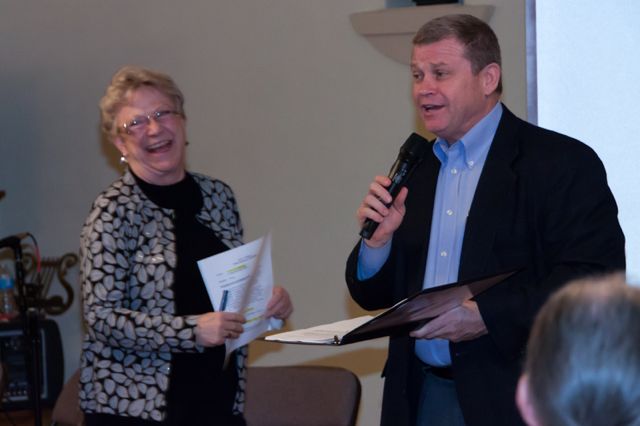




Attorney General Wasden hits the road to advance transparency

From the Idaho Statesman

Idaho got a shout-out Thursday at a meeting of the nation’s attorneys general about a cooperative effort to make government more accessible and accountable.

Attorney General Lawrence Wasden touted the efforts of IDOG — Idahoans for Openness in Government — as a model for transparency.

“One of the great strengths of our political system is that people are involved,” Wasden said Thursday after his talk on open records and open meetings. “But the only way it is meaningful is if they have an understanding of how their government operates. They have to have access to this information and they have to be able to be at these meetings.”

It’s one thing to advise colleagues in National Association of Attorneys General in balmy Ft. Lauderdale, Fla.

It’s quite another to commit to helping IDOG put on annual seminars, which Wasden has done since IDOG’s founding in 2004.

On Thursday, Wasden will be here at the Idaho Statesman from 6:30 to 9 p.m., schooling reporters, public officials and ordinary citizens about the public’s rights. Two more meetings follow, Dec. 12 in Payette and Jan. 9 in Nampa.

Wasden is Idaho’s longest-serving attorney general, at 10 years. He says he plans to run for a fourth four-year term in 2014, though the ember of his boyhood dream to represent Idaho in the U.S. Senate still burns.

“If the opportunity availed itself, I would be very interested,” Wasden said. “And I’m not going to cut out anything else, either. I don’t know where we’re going to end up down the road.”

Partnering with the Idaho Press Club, the Association of Idaho Cities and Idaho Association of Counties doesn’t hurt Wasden’s prospects. After squeaking by in a four-way GOP primary by 2,000 votes in 2002, Wasden has had an easier time. He won the 2002 general election with 58 percent of the vote; carried 62 percent in 2006; and was unopposed in 2010.

Having covered Wasden since his time as chief of staff to Attorney General Al Lance, I think it’s fair to say he’s not just cozying up to the media and local officials.

He takes seriously his duty to be the people’s lawyer. That’s meant prosecuting errant public officials, pressing for release of records, tangling with an ex-governor over toughening campaign finance disclosures, and fighting his GOP colleagues to boost income from state endowments.

An English minor in college, he says his favorite American novels are “Grapes of Wrath” and “To Kill a Mockingbird.”

“There is a connection,” Wasden said. “They bring to the forefront the common man, what government is supposed to do and how we’re supposed to interact. It’s incumbent on leaders to see that that happens.”

For Wasden, educating local officials, reporters and the public is a core duty.

“To be honest, sometimes local officials just didn’t want to release the records,” Wasden said. “We had to improve their knowledge level.”

Meanwhile, reporters can be too aggressive and confuse records laws in other states or the federal Freedom of Information Act with Idaho law.

“What we tell reporters is if you just talk to people, they’ll give you the stuff,” Wasden said. “With the local officials, we say this is public, you oughta give it to them. And with the public, we’re saying that sometimes what you think the law says isn’t necessarily so.”

Explaining the limits of the laws is a big part of the seminars, coupled with Wasden’s print and online publication of open meeting and public records manuals.

“There is a sheet of music from which we all have to sing,” Wasden said. “We get the press and local government and the public at large together in one room and we get one answer to the question.”

From the Idaho Statesman

Since when did driving become a state secret?

Editorial from the Lewiston Tribune

By Marty Trillhaase

It’s not so much the Idaho Transportation Department – and every transportation outfit in the other 49 states – is selling off information it gleans from driver’s licenses and vehicle registrations.

It’s not even that ITD makes about $5.4 million – most of which is net profit – although there is something unseemly about the government using public data as a business model.

What ought to have you steamed is this notion that erstwhile public documents – a driver’s license and automobile registration – are off-limits to ordinary citizens and even most businesses.

For that, you can thank Congress. Almost 20 years ago, it declared that only a handful of privileged groups could obtain driver’s licenses and vehicle registrations.??If you’re a data collection outfit that helps automobile manufacturers locate owners of cars during a product recall, fine.

If you’re an insurance company looking to verify that a policy holder owns the car in question and is licensed to drive, go ahead.

Same goes if you’re engaged in labor market research and you want
to compare the relative youth of a region’s work force.

But if you are trying to sell parts to everyone who drives a Corvette or accessories to Jeep owners, forget it.

If you are simply curious about who was driving a car in your neighborhood last week, you’re also out of luck.??It’s been decades since Idaho naively listed anyone’s Social Security number on a driver’s license. So what’s the big deal? Is the listing of your address, your age, a physical description or the kind of car you drive any more sensitive than:

  • The number of times you’ve been married and divorced – and to whom?
  • The house you own, where it’s located, what it’s worth and how much you pay in property taxes?
  • The last time you skipped an election?
  • Whether you’re registered as a Republican or a Democrat? (That’s on file because Idaho’s lawmakers closed the state primary election to non-registered voters at the GOP’s insistence.)
  • Which candidates for political office you’ve helped with a check?
  • Anytime you signed a petition to recall an elected official, repeal a law or pass a new one?
  • Whether you have a lead foot?

That’s not government invading your privacy. That’s the individual entering the public arena – a wedding, the filing of a deed, participating in the political process or getting a speeding ticket – and creating a public document in the process.

To say nothing of the information you give away to for-profit businesses. Your magazine subscriptions. Where you shop and what
you buy. Much of that information ends up on a list.

Truly private stuff remains private. Your income tax return is confidential. So is your banking information. As well as any health history.

But in this Internet age, a few keystrokes will kick loose a passel of facts on people – to say nothing of the information they volunteer on Facebook.

Getting a driver’s license is a public act. We live in an open society where what the government does is subject to public inspection – whether it’s a company looking to make a profit or an individual who wants to satisfy his curiosity.

Whatever the fallout – and it’s usually nothing more serious than getting more junk in the mail – it certainly beats the alternative where every public document is treated as a state secret. – M.T

Editorial from the Lewiston Tribune

BMH files suit to get investigation information

From the Idaho State Journal

BLACKFOOT — After a series of allegations launched a half million dollar internal investigation into potential improprieties at Bingham Memorial Hospital that led to no reprimands or dismissals, the hospital has filed a suit to force Bingham County to release documents pertaining to its hospital probe.

The documents Bingham Memorial seeks relate to an investigation and related actions by Planning & Zoning Commission Chairman Lee Hammett and others on behalf of the Bingham County commissioners earlier this year.

According to a release from Bingham Memorial’s board of directors, the hospital first made a public records request several months ago. Bingham County did release a number of emails from county Commissioner Ladd Carter and others in response to the public records request, but Hammett’s documents were not produced.

“We were surprised and disappointed that the request for records kept by Mr. Lee Hammett is being denied by the county based on its current position that Mr. Hammett was acting solely as a private individual when he took the actions that we believe wrongly damaged the hospital’s reputation and caused it to suffer significant economic damages,” Dr. Clark Allen, a member of the Bingham Memorial Hospital board said in the release.

The Bingham County Commission is standing by its assertion that any investigation conducted by Hammett was not officially authorized by the county.

“We did not authorize him (Hammett) to do anything for us,” commission Chairman Cleone Jolley said Tuesday.

The county commissioner acknowledged that Hammett had contacted individual commissioners about concerns he had about Bingham Memorial, but the board never authorized Hammett as an agent to conduct any investigation.

“I told him if he had specific information about problems at the hospital we might look at that information, but that was all,” Jolley said. “I guess he (Hammett) took that to mean I authorized an investigation.”

Jolley said no individual commissioner can authorize any official action, adding official actions require a majority of the commissioners to approve it in an open meeting.

In its press release on the lawsuit filed by Bingham Memorial by the law firm of Holland & Hart, the hospital board maintains that “documents and emails that the hospital has obtained to date reflect that Hammett was communicating, coordinating and meeting with county officials.”

“It is troubling that it was only after the hospital’s public records request was made that the county began distancing itself from Hammett, claiming he was not acting under its authority,” Dr. Allen said.

The hospital asserts that the allegations made by Hammett caused harm to the reputation of Bingham Memorial and led to an internal investigation by Holland & Hart that ended up taking nearly 1,500 billable hours of time and a bill of about $500,000.

That internal investigation uncovered some policy problems at the hospital and the misuse of hospital owned equipment by an employee who has since left Bingham Memorial. The only issue uncovered by the internal probe that remains under investigation by the Idaho Attorney General is secret telephone conversation recordings that were made involving three different phones — to a receptionist, nurse and doctor — in one physician’s office at Bingham Memorial. No trace of the recordings, which were made in late June and early July of 2010, have been recovered.

Commissioner Jolley said he felt comfortable with the findings of that internal Bingham Memorial Hospital probe, although he is still waiting on the Attorney General’s findings. As far as additional documentation about any county probe into Bingham Memorial, Jolley said, “We’ve given them all we can.”

The hospital board disagrees.

“It is our hope this suit will yield the information requested and we will be able to achieve some understanding of the elements of the investigation that caused so much needless harm to Bingham Memorial Hospital,” Dr. Allen said in the news release.

Bingham County Prosecutor Scott Andrew said he hasn’t seen the civil complaint that was filed by the hospital Tuesday, but he’ll ask for a judge’s conference to determine the exact elements of the complaint once it is served.

“We’ve turned over everything we have and Lee (Hammett) is not an agent, period,” Andrew said.

From the Idaho State Journal

Idaho attorney general holds workshop on open records, meetings

From the Idaho Statesman

Idaho Attorney General Lawrence Wasden will lead the session for public officials, government staff, journalists and other interested citizens.

The free workshop is 6:30 to 9 p.m. Dec. 6 at the Idaho Statesman, 1200 N. Curtis Road. It is sponsored and organized by Idahoans for Openness in Government.

Wasden and his office helped IDOG develop the program, which educates people about Idaho’s open records and public meetings laws through a series of role-playing sketches.

Deputy Attorney General Brian Kane also will participate.

The sessions are recommended by the AG’s Office, the Association of Idaho Cities, the Idaho Association of Counties and the Idaho Press Club.

“We all benefit when the public, the media and government officials are fully aware of the public’s right to access government information and observe the conduct of the public business,” said IDOG President Betsy Russell.

RSVP to bmanny@idahostates man.com. For more information, call Russell at 336-2854.

Similar sessions are planned Dec. 12 in Payette and Jan. 9 in Nampa.

From the Idaho Statesman

District stays mum on agreement

From the Idaho FallsPost Register

By Nate Sunderland

An agreement between Blackfoot School District 55 and former Superintendent Scott Crane, made prior to his retirement, is being denied public purview at Crane’s request.

The Post Register and former Blackfoot teacher Joyce Bingham are suing the district for documents detailing the nature of the agreement and a $105,428 contract payout made to an unnamed source the day after Crane’s June 30 retirement.

District 55 officials have refused to release documents relating to the agreement or the payout citing personnel laws in Idaho Code.

There is no direct evidence linking the contract payment and the agreement; however, Bingham’s attorney, Jared Harris, and the Post Register are acting on the assumption that the issues are related.

The Post Register also is seeking public response for an alleged breach of Idaho’s open meeting laws. The Post Register has sent notice to the district of its belief that the school board violated open meeting laws by making an agreement with Crane during an executive session.

The agreement was made April 24 during an 8-minute executive session called ostensibly to consider the hiring of a new employee. During the executive session the board “executed an agreement with (Crane)” according to the meeting minutes.

An affidavit written by interim Superintendent Chad Struhs was submitted in response to the Bingham lawsuit by District 55 attorney Dale Storer on Tuesday.

In the affidavit Struhs writes, “I contacted Dr. Crane and urged him to allow the District to release the requested agreement (but) Dr. Crane declined to do so.”

It’s unclear how the agreement allows Crane, a former employee, to dictate the actions of the school board and district officials.

Crane could not be reached for comment Tuesday. He now serves as superintendent of the Grand Canyon School District in c.

School board members could not be reached or declined to comment on the matter Tuesday.

Struhs declined to comment pending a hearing Nov. 30 between the Post Register, Bingham and the district. At the hearing a judge will make the determination whether the pertinent documents should be released.

From the Idaho FallsPost Register

Was Ada County transparent in Dynamis dealings?

From KTVB-TV

BOISE — The Ada County Board of County Commissioners announced the partnership with Dynamis Energy more than two years ago, and since then, there’s been public outcry.

The project is building a waste-to-energy facility at the Hidden Hollow Sanitary Landfill. The idea is to divert some of the landfill’s trash by burning it, then selling the generated energy to Idaho Power.

How did this idea come about? KTVB combed through documents and recordings and talked to people involved with the project and people who thought they should have been involved.

KTVB has heard a number of concerns about various parts of the project: From environmental aspects, to the technology, to the company Dynamis. For this report, KTVB investigated the transparency questions: How county commissioners handled a big project and who was left out.

Former hearing clerk: “The public didn’t know it was happening.”

In June 2010, the Board of Ada County Commissioners signed into an agreement with Dynamis Energy, LLC. A $2 million deal for the plans and design of a waste to energy facility at the Hidden Hollow landfill.

Back in May, Commissioner Sharon Ullman told KTVB they chose Dynamis out of a number of companies.

“We put out a request for Expressions of Interest, and had 7 responses. Dynamis had to compete for this project,” Ullman said.

But critics say this deal was already done before the request went out. KTVB found that request for interested companies was filed nine business days before the June 30, 2010 meeting when commissioners signed the Dynamis contract. In that meeting, commissioners openly talked about working on the deal for a while.

Commissioner in 2010: ‘We’ve been working on this for some time’

KTVB obtained recordings of that meeting. Then-Commissioner Fred Tilman remarked: “Anyway, we’ve been working on this for some time…” and “Lord knows we’ve had everybody in the building working on it…so… [several people heard laughing].”

Ultimately, the agreement was signed in that June 30, 2010 meeting. The meeting was four minutes long. Commissioners talked about needing to move the project along quickly.

“I’m just really excited and hope that this moves along quickly, even if we have a few more late nights getting it done,” Ullman said during the 2010 meeting.

In fact, the commissioners had to reconvene the meeting later in the day to finish up paperwork they said was accidentally left out in the rush to sign the contract.

“In our haste to get the professional services agreement, the terms of that agreement completed, and get it done this morning, signed, we did overlook the fact that we have a commitment letter to Dynamis that should have been on our agenda as well that we need to sign, approve and sign,” Ullman said in the 2010 meeting.

Former clerk believes commissioners skirted open meeting laws

Pam Woodies is a former county employee who says she quit over Dynamis. She was the commission’s hearing clerk at the time the contract was signed and says she had access to the commissioners’ public and private schedules. She says she didn’t like what she saw happening in the office leading up to the contract.

“I chose to leave just because I didn’t want to be party anymore to working in an office where that degree of what I thought was inappropriate behavior by our elected officials was going on,” Woodies said.

Woodies remembers when the contract was signed, and she recalls being surprised it was signed in four minutes. Other contracts, smaller ones, she says were sometimes signed without public hearings, but she thought the Dynamis contract sounded like a big one.

“To my knowledge, that was the first public notice of anything related to Dynamis was when the contract was signed,” Woodies said. “It seemed a very significant event. This was a huge undertaking, as I understood. It was a huge amount of money.”

Former clerk: ‘A lot of behind-closed-door things’

She says while that was the first time it was brought up publicly, Dynamis had been around the office for a while.

“I think the Dynamis initial discussions were back in ’09. Middle of ’09.” Woodies said. “I saw a lot of meetings that they were holding that the public didn’t know about. I wasn’t posting meetings, notices of meetings. Or I would see individual meetings where one commissioner would meet with someone and then they would schedule an hour later for the next commissioner to meet with that same person, presumably about that same topic. And normally that would be done at a real meeting with a quorum, with a recording, with a clerk.’

“It just was a lot of meetings, a lot of behind closed door things going on that one day miraculously turned into a signed contract.” Woodies said. “To kind of slip it in there kind of like a [smaller] contract to lease a copier, which is kind of how it was handled, struck me as odd.”

County Operations cut from project, P&Z never consulted

Other things are unusual about the Dynamis project. For example, soon after the county’s operations department finished paying out the nearly $2 million dollars, the director confirms landfill management was taken away from his department and says for the first time in nearly 30 years, Operations isn’t overseeing a large county building project.

Also, the Dynamis project never went through Planning and Zoning for any permits or recommendations.

“People would ask me, ‘Why aren’t you doing something about it?’ And I would just say, ‘We haven’t looked at any of the documents because nothing has come before the commission’,” Planning and Zoning Chairman John Seidl said. “We do believe that a project of this magnitude and of this scope probably should be reviewed by the planning and zoning commission.”

What’s happening now?

Since that June 2010 deal, the county paid out the contracted nearly $2 million. KTVB obtained the payment records and found county money paid not only for planning and engineering services, but thousands of dollars in computer equipment. The contracts have been changed; one was changed in a summer 2012 meeting with the change added to the agenda with less than 48 hours notice.

“Especially this last summer, the contract’s been amended, the franchise agreement’s been amended, and everything has just been going along click, click, click, giving Dynamis everything they’ve asked for. And the public was never involved in it,” Jim Tibbs, Commissioner Elect, said. “For me, I think what was done was extremely unethical.”

On Tuesday Tibbs, a strong Dynamis opponent, was elected to the Commission, as was Dave Case, who’s already sitting on the board [appointed to fill a vacancy] and has already tried unsuccessfully to pull the contracts.

Once sworn in at the beginning of the year, Tibbs plans to tackle the project and ask the $2 million be returned.

“After January 14th, there is a very good chance that the direction of the commission could change, but we have to wait, we have to talk about it,” Tibbs said. Tibbs says he and the other commissioners would have to consult the county’s legal staff to see if the contracts could be pulled.

Non-profit group files lawsuit against county

On Thursday, Idaho Citizens for a Safe Environment and a Transparent Government, Inc. filed suit against the county. The attorney who filed the lawsuit lives about a mile and a half from the landfill. He says legal action was the only way to stop the project.

“I think it’s our only avenue at this point,” Attorney Andrew Schoppe said.

Amongst allegations, the group is claiming open meeting law violations and wants the contracts thrown out. The group has also successfully prompted a pending criminal investigation into the Commission’s dealings with Dynamis.

“We’re very hopeful that this will expose the wrongdoing that we think is there and hopefully tell us all why it is the commissioners have been so zealous about this project,” Schoppe said.

P&Z holds public meeting in response to concerns

Also Thursday, Planning and Zoning held a public meeting in response to a citizen petition asking to voice concerns over the project.

“I think the county commissioners believe the way they were handling this was correct, and the Planning and Zoning Commission tonight believes that there ought to be a hearing on it,” Chairman Seidl said.

The advisory board can’t change anything without a proposal in front of them, but they are making a recommendation to the county commission. The following is what P&Z approved sending to the commission:

“We as the Planning and Zoning Commission have accommodated a request by the public to hold a hearing on the Dynamis Energy Project planned at the Ada County Landfill. Based on the testimony received, we believe that the approval of this project did not afford the public and affected persons the opportunity to comment publicly as to the effect of the project on them, and did not have the opportunity to provide substantive input to the approval process. We therefore recommend to the county commissioners that they require the project be submitted to Ada County as a conditional use permit and be scheduled for a regular public meeting of the Ada County Planning and Zoning Commission.”

Commission to take up $2 million in upcoming meeting

Commissioners have said the contracted deal is once construction begins, Dynamis will pay the county $2 million for the plans. A new meeting agenda for Wednesday at 1 p.m. suggests commissioners are considering exercising part of the Dynamis contract that could call for the payment of $2 million sooner.

The CEO of Dynamis did not respond to requests for an interview for this particular story. The current commissioners also declined to discuss transparency questions, the chairman referencing the newly-filed lawsuit.

From KTVB-TV

Judge orders Idaho group to disclose secret donors

From The Spokesman-Review

BOISE – A secretive group that underwrote more than $200,000 in TV campaign commercials in favor of three Idaho school reform ballot measures must disclose its donors by Wednesday, a 4th District judge ruled Monday afternoon.

Judge Mike Wetherell ordered Education Voters of Idaho to disclose its donors by 3 p.m. on Halloween. The group must “file all required further reports when required or face sanctions,” the judge wrote.

Possible sanctions include fines and penalties contained in the state’s Sunshine law. In addition, anyone flouting a court order could be held in contempt by the court, and even jailed until they comply with the order.

“The disclosure requirements clearly do not place an undue burden on free speech,” Wetherell wrote in his 19-page decision. “Voters are entitled to know who is standing behind the curtain. Idaho voters passed the Sunshine Initiative to give themselves the right to see who is trying to influence their vote.”

Christ Troupis, attorney for EVI, said requiring the group to name its donors would “chill 1st Amendment rights,” and that the donors had a “reasonable expectation of privacy.” Troupis maintained his group, as a non-profit 501c4 nonprofit, was exempt from disclosure requirements. “There is no public interest in prying into private corporate business,” he wrote in arguments filed with the court.

But Wetherell ruled, “Idaho’s Sunshine Law applies to all individuals, corporations, associations or other entities of any type.”

The judge wrote, “The interest in free, fair and honest elections free of fraud and deception and the right of the people to know who seeks their vote for a candidate or an issue is at the heart of the electoral process.”

Idaho Secretary of State Ben Ysursa sued to enforce the state’s Sunshine Law after EVI rebuffed his demands for disclosure; Idaho’s voters enacted the law through a citizen initiative in 1974. Ysursa pointed to a clause in the law that forbids groups from concealing the true source of funds used in campaigns.

Wetherell cited that clause from the law twice in his decision, once in bold-face. “Idaho law is clear and unambiguous,” he wrote. “There can be no anonymous contributions either in favor of or in opposition to Propositions 1, 2 and 3.”

He also pointed to a 9th Circuit Court of Appeals decision in a 2010 Washington case, Human Life of Washington Inc., that upheld that state’s similar disclosure requirement.

Education Voters of Idaho, which formed in August, collected anonymous donations, then passed along more than $200,000 to a related group, Parents for Education Reform, which the same day spent the money on the TV ads. The two group share directors and the same address; both were incorporated by two Boise political activists, John Foster and Kate Haas.

Former state Rep. Debbie Field, R-Boise, chair of both groups, said three weeks ago that potential donors to the pro-school reform measure campaign were told they had two ways to give: Directly to the official campaign organization, with full reporting, or anonymously through the two new groups, to avoid “intimidation” from teachers unions that oppose the measures.

Field said then that the groups provided an avenue “for people who really wanted to give, but didn’t want to go through the intimidation.” She said, “They will give if they feel like they can give anonymously to a place that will support education, but they don’t want to be maligned.”

After Wetherell’s ruling late Monday, Troupis told the Associated Press he was reviewing the decision and considering an appeal to the Idaho Supreme Court.

Ysursa maintains that Idahoans have a right to know who paid for the campaign ads before they vote on the three measures on election day – which is just one week away.

“This is about disclosure,” Ysursa said. “If we didn’t take this one to the mat, we weren’t going to take anything. To me, the crucial element of the law is disclosure.”

Brian Kane, deputy Idaho attorney general, told the court Monday, “There is a need for disclosure – the public has a right to know. This is the court’s opportunity to let that sun shine.”

From The Spokesman-Review

Petition seeks disclosure of public records

From the Bonner County Daily Bee

SANDPOINT — A former prosecutor is suing Bonner County to force the release of documents pertaining to the county’s retention of outside legal counsel.

Phil Robinson’s petition also seeks $10,000 in attorney fees if the county does  not release the materials and a $3,000 civil penalty for improperly denying the public records requests.

Robinson argues in the petition that the denials were illegal, frivolous, malicious and made in bad faith.

The 18-page petition was filed in 1st District Court on Wednesday. The county, the county commission and commissioners Cornel Rasor, Mike Nielsen and Lewis Rich are each identified as defendants.

Bonner County officials do not comment on pending litigation.

Robinson, a former elected and appointed prosecutor who is in private practice, filed three public records requests for meeting minutes, resolutions, contracts and payment information related to the hiring of independent legal counsel.

Each of the public records requests seek the same information, although they cover different time spans in 2012.

Prosecutor Louis Marshall, Robinson’s successor in office, denied the requests on grounds they were exempt from public disclosure because they involved attorney-client privilege.

“Please be advised that any and all future requests regarding the same subject, and for any time period, are hereby deemed denied as well and will receive no response from this office,” Marshall said in the final denial letter to Robinson.

Robinson argues in the petition that it’s impossible to claim such an exemption when the matter of outside legal counsel was discussed in open session and reported by the media.

“Further, the discussion of same in open public regular meetings and workshops, budget meetings, and budget hearings, waives any potential for Respondents to claim exemption privilege, and specifically attorney-client privilege,” Robinson said in the petition.

Commissioners have openly discussed the use of outside counsel to defend a lawsuit filed by the developers of a fly-in housing development at Sandpoint Airport, de-list caribou as an endangered species and to judicially confirm financing options for completion of the embattled courthouse remodel.

The board also took up a requests earlier this year by Clerk Marie Scott and Treasurer Cheryl Piehl to set aside $50,000 to $100,000 to hire independent counsel to represent them in conflicts with the county commission.

Scott and Piehl argued the prosecutor’s office could not adequately represent them because the office already represents the commission.

Robinson was widely considered to be Scott and Piehl’s pick for outside counsel. Commissioners approved $15,000 to appoint special counsel, but said the funding could not be used to obtain advice on how to sue the county.

It’s the second time this year the county has been sued over denied public records requests. The Kootenai Environmental Alliance filed suit earlier this year to flesh out the county’s ties with conservative activists. That action is still pending.

From the Bonner County Daily Bee

Records show payout, board mum, community outraged

From the Blackfoot Morning News

By LISA LETE
lisaalete@cableone.net

Patrons and school teachers are reacting to the news that Blackfoot School District officials denied Joyce Bingham’s request to view copies of a payout from the school district’s bank account in the amount of $105,428 on July 2, 2012.

Bingham discovered the payout while examining public records. The payment was made through Zion’s Bank (Salt Lake City, UT) and is noted on the expenditure description as AP Contract Services.

Bingham, a former Blackfoot High School teacher, made her request to the school board last month and was informed last Friday via a letter from interim superintendent Chad Struhs that “the issue is regarding personnel and that under the advisement of the district’s attorney, her request was denied.”

Bingham was advised that if she wishes to pursue this matter that she should seek legal counsel. Sarah Condon, a third grade teacher at Stalker Elementary School and co-president of the Blackfoot Education Association (BEA), said she and other teachers in the district “want to know where this money went.”

“This is a concern,” Condon said, “especially because of the tight budget the school’s are contending with this year.

“There are rumors going around that they [the school district] paid off [former superintendent] Scott Crane,” she went on. “I don’t know if this true or not but the way they’re keeping this quiet, someone needs to look into the rumors. I hope she [Bingham] continues to pursue this.”

Bobbie Steffenson, a BEA member and employee at Mountain View Middle School agreed, saying, “this is a situation that warrants an investigation especially with the cuts that the district has endured.”

“We’ve had programs cut; people have lost jobs; supplies are limited…we can’t even order new textbooks,” she said. “That money could’ve paid for a lot of things.”

Patrons are weighing in on Facebook as well, speculating on what the payout may have been used for.?    Emily Harrington posted: “They are trying to hide the fact that they paid Mr. [Scott] Crane his bonus even though he didn’t fulfill his contract…I’d put money on it. You know dang well that this is what they’re hiding or they would’ve made it public already.”

Josh Christiansen posted: “And they say there is no money for field trips? They should be ashamed of themselves.”

Attempts were made to reach interim superintendent Chad Struhs, former superintendent Crane and members of the school board by phone. Board trustee, Mary Jo Marlow, was the only one reached by telephone; however, she declined to comment on the subject at this time. None of the others returned calls.

From the Blackfoot Morning News

After open meeting violation, council re-passes city budget, apologizes

From the Idaho Falls Post Register
Members of the Idaho Falls City Council conducted a “do-over” Wednesday night, voting to adopt the city’s 2013 budget after publicly apologizing for breaking Idaho’s open meeting laws.

The violation occurred Aug. 23 during a recess of the city’s budget hearing when council members Ken Taylor, Mike Lehto and Ida Hardcastle held a closed-doors discussion on how they would vote on the $186 million spending plan.

Idaho law requires that governments conduct deliberations and votes in public. The violation of the law voided last week’s budget vote, forcing council members to vote again Wednesday night. Once again, they unanimously approved the budget that relies on the same property tax collections as during the previous three years.

Council members did not make any changes to the structure of the budget and never discussed a previous proposal to raise property taxes. They also did not conduct a full-blown budget hearing.

Resident Bryan Smith, an attorney who fought the proposal to raise taxes, asked to speak during Wednesday’s meeting. He was denied the floor after council members told him the session was not advertised as an official public hearing.

The Wednesday night meeting drew a near-capacity crowd despite only one day’s notice. It was first announced Tuesday. A lengthy and technical debate over open meetings law and the definition of a quorum consumed the first hour of the meeting.

Taylor said the violation was unintentional but added that he was wiser because of the lessons he learned. With his voice breaking at times, he asked for the public’s forgiveness and restored trust.

“I had no idea I had potentially violated open meetings law,” Taylor said. “I merely wanted to find a quiet place where we could visit with each other (during a recess in the meeting) without interruption.”

Lehto apologized and asked for additional open meetings training after saying there are significant “gray areas” in the law.

“I further believe that we are entering an era now, sadly, of public service that is going to be based, perhaps, on distrust and not the spirit of the law or the intent of the law, which I firmly believe the council did not violate,” Lehto said.

The tension increased when council member Sharon Parry said city attorney Dale Storer could not represent her on matters concerning open meetings because of what she described as his personal and professional conflicts.

Parry then called on her husband, attorney Steven Parry, to issue a statement on her behalf. The statement referenced a July 12 opinion column written by Storer that appeared in the Post Register. Storer’s column made reference to Sharon Parry and open meetings law.

Later in the statement, Parry criticized Storer for not intervening during the Aug. 23 violation and made accusations of secret “telephone polls” between council members that Parry said also violated open meetings laws.

“You, collectively, have a serious systematic problem that needs to be addressed,” Steven Parry said, reading from a prepared statement.

Council members agreed to discuss those issues and accusations at a later meeting after Sharon Parry asked Mayor Jared Fuhriman whether he wanted to “go toe-to-toe now and discuss these things.”

Clark Corbin can be reached at 542-6761.

From the Idaho Falls Post Register